

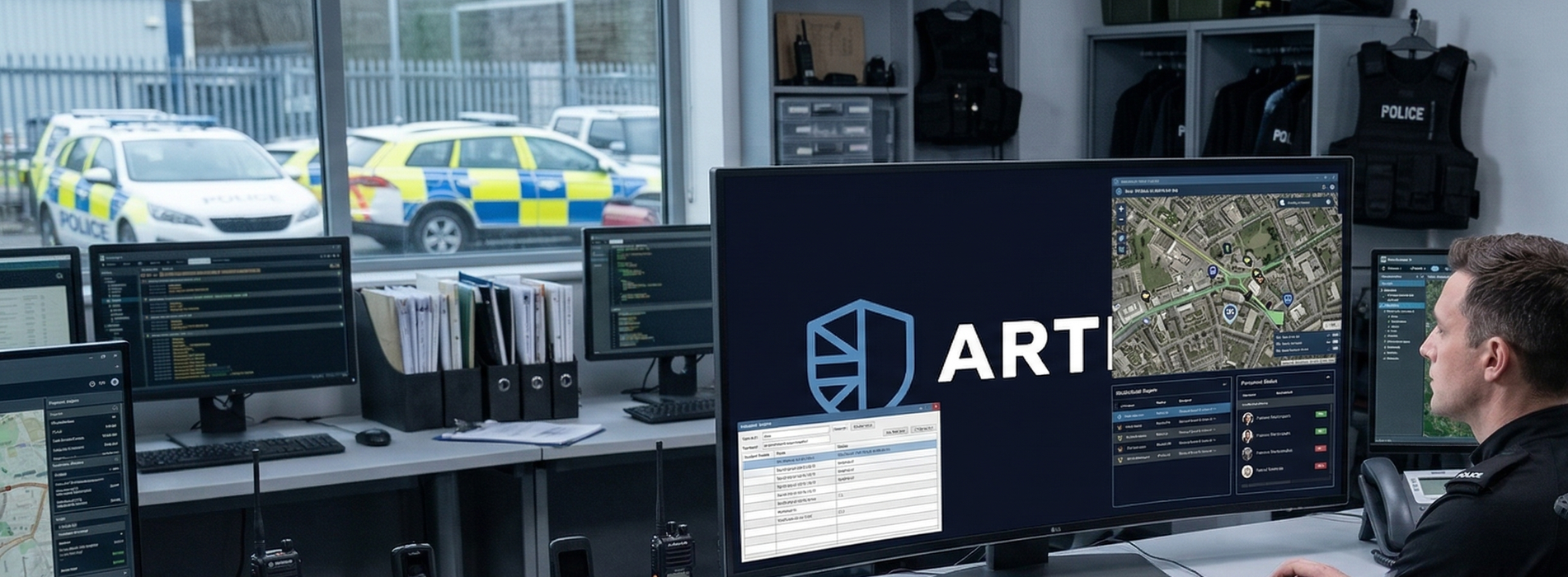
Arthur is a public safety analytics platform built for UK policing. It ingests data from multiple sources and applies validated analytical models - risk scoring, pattern matching, anomaly detection, predictive clustering - to produce intelligence products that meet operational standards.
Every output is fully explainable. There are no black boxes. Any score, flag or match can be traced back to the inputs and logic that produced it, interrogated by an analyst, and challenged. Every action taken within the system is logged, timestamped, and attributed to a named user.
Bias detection is built into the analytical pipeline, not bolted on after the fact. The system continuously monitors for disproportionality across protected characteristics, particularly where subjective inputs are involved.
Arthur produces intelligence, not instructions. The platform maintains a strict separation between the analytical layer and operational decision-making. It generates probabilistic assessments - never deterministic orders. The gap between an analytical output and an operational decision is where governance lives, and the system is architected to enforce that boundary.
Human oversight is meaningful, not performative. Analysts are supported with tooling that allows genuine interrogation of results before any operational action is taken. Where Arthur's output is used to trigger a decision, there is a documented human authorisation gate - proportionate to the risks and harms that an incorrect decision could cause, and defensible under PACE, the Equality Act, and ECHR Articles 6 and 8.
Arthur connects existing systems rather than replacing them, structures intelligence around real investigative workflows, and enables cross-border collaboration without compromising sovereign control.
“Wanted to put on record a massive thank you from us in Home Office - you heard it directly yesterday from our Chief Technology Officer and Director of Home Office Intelligence... It's been brilliant working with you.”
"The team sat with our staff, assessed the information, really went through the data. They didn’t waste anyone’s time: before talking to you, they’ll absorb themselves in information. And only ask you what they need to."